Saturday, 15 November 2014

Filth Review

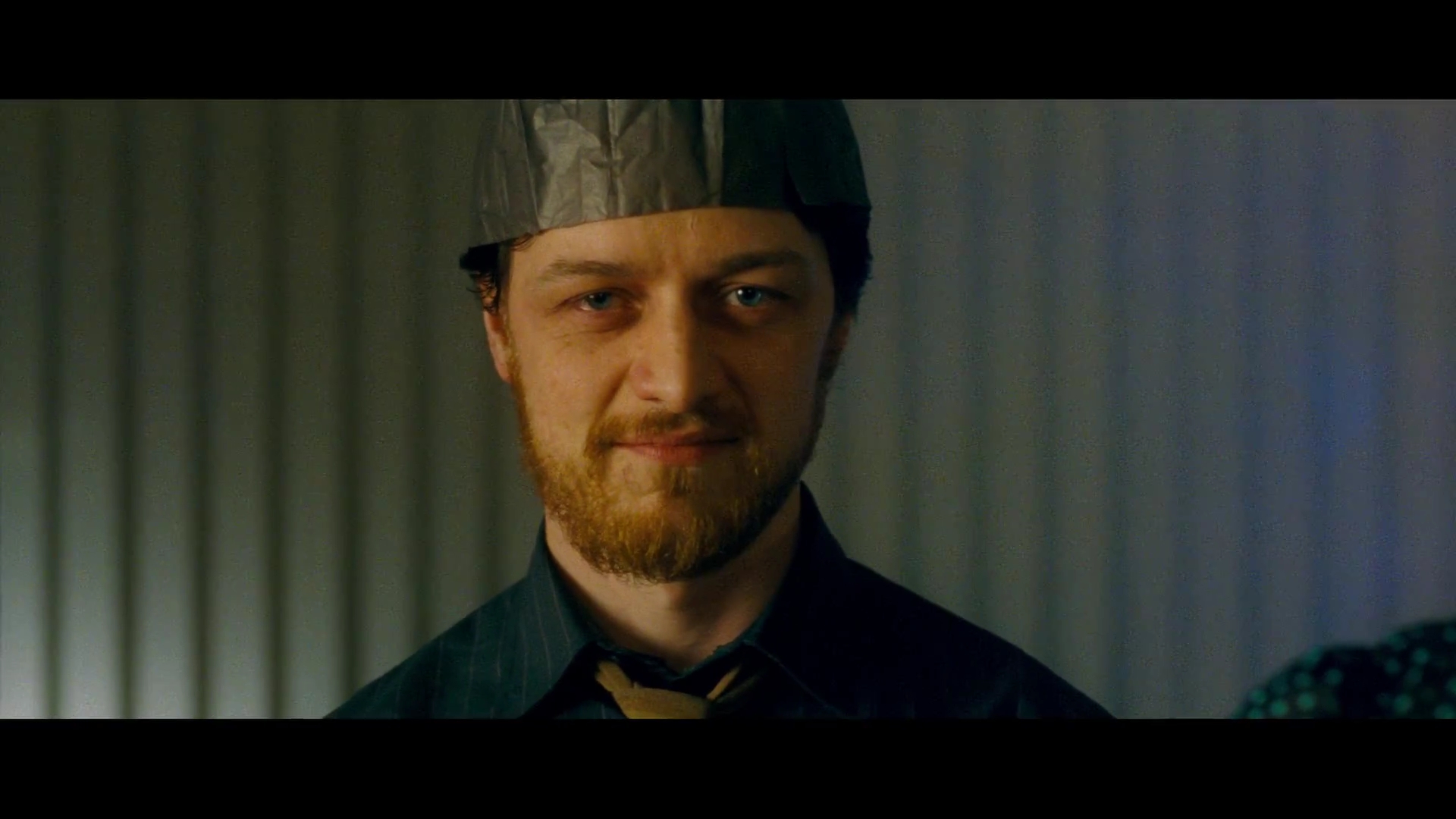
Think you know James McAvoy? Think again. His performance in Jon S. Baird's adaptation of Irving Welsh's Filth is astounding and there is nothing sweet or fluffy about it or any other aspect of the film. Filth is very funny, very wrong, very sordid and very likely to incite hatred from Daily Mail readers across the land (Hooray!). Sex, drugs, more sex, more drugs, violence, corruption, depravity, even more sex and drugs… Filth is absolutely, well, filthy, and is a memorable experience to say the least. And it has sex and drugs in it. 


It is not always easy viewing. Far from it. Sometime after the midway point the laughs die down, the stomach churns a little more uneasily, the grimaces are more evident and the intakes of breath are more audible. We are less willing to forgive but, like the car crash up ahead that has caused all the drivers in front to rubber-neck, well, just one long look as we pass can't hurt, can it? 

Bruce Robertson (McAvoy) is a bigot. He's bi-polar, a junkie, sex-obsessed, self-obsessed, manipulative and frequently thoroughly unpleasant. He's also a cop. With a promotion in the balance, Bruce is up against several colleagues and sets about turning one against the other, unsettling them with salacious gossip and blatant lies to ensure he beats them to the post. Throw in his manipulation of fellow freemason Bladesey (Eddie Marsan), his sultry wife, Carole (Shauna MacDonald) and his hallucinatory sessions with Doctor Rossi (Jim Broadbent) and you have one monumentally screwed up anti-hero. And what's not to love about that? 

The Coen brothers may have the monopoly on fantastic character names, but nobody writes actual characters like Welsh and the cast that Baird has poured into Filth is staggeringly good in their interpretation of this mess of freaks and misfits. There isn't a poor performance in the entire film from the uncertain laddishness of Ray (Jamie Bell) to the fantastic absurdity of Doctor Rossi. While none are bona fide Hollywood stars, the cast that glitters in a maniacal, dirty way is a treat beyond expectation: Imogen Poots, Shirley Henderson, Gary Lewis (yes, Billy Elliott and his dad are reunited at last!), John Sessions, Joanne Froggatt… It's a fantastic, eclectic mix of British stars that proves Britain has got talent. Certainly more than Simon Cowell ever has. 

Filth is a perfectly paced film; it roars ahead stirring emotions and judgement, exciting and thrilling as it trashes everything in its wake but it is never so fast that we feel left behind or that we've missed out on a juicy morsel of degeneracy. Sufficient time is allowed for us to filter through, as bes

t we can, the quagmire that is Bruce's life, but Baird never pauses or permits us time to glance at our watch or neighbour.

The soundtrack, too, is bang on the money stamping though a musical landscape that is at times acceptably cheesy and more often a reminder of what to check is on the iPod. Where else can you effortlessly segue from David Soul into Shaking' Stevens? While the latter is consigned to audio wallpaper, the bizarrely fantastic cameo from David Soul is a delight. Had Dennis Potter snorted cocaine Pennies From Heaven might have resembled this.

In the face of common opinion that it simply wouldn't work, and after years of development, Filth turns out to be a near masterpiece, whose recognition as such is only made less likely by the inevitable comparison with Trainspotting. It is a ballsy adaptation of a hugely admired novel, as unpredictable as its central character and charged with the vitriolic energy of the author's writing. A well balanced juggling act of tones; in lesser hands this would have been a mess. 


It is not always a pleasant watch, but like the central character, it finds its way to a strange, engaging and even rather emotional resolution. Whilst there is likely to be a good forty percent of casual viewers who are left completely cold, the remaining will see a successful, proudly Scottish film that is by turns dark, shocking, comical and moving, which also goes out on an incredibly catchy and surprisingly fitting seventies hit.

Filth is Taggart if it had snorted ecstasy, cocaine and speed off the toilet seat of a dirty, Scottish strip club. And if you're not down with that, what the fuck are you still doing here?

Wednesday, 24 September 2014

The Equalizer Review

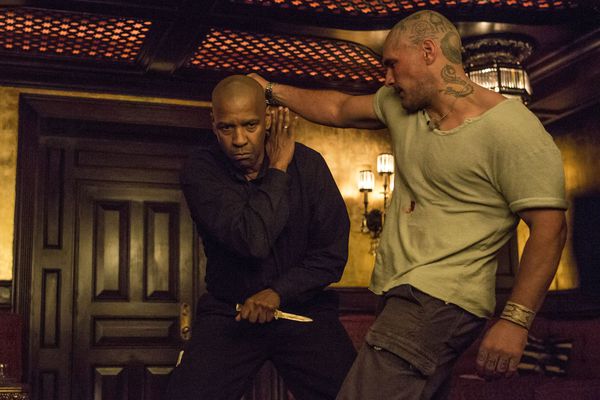
Denzel Washington is great, isn't he? Throughout his thirty-odd years in the industry he's portrayed good guys, bad guys, flawed guys and even real guys, with his portrayal of Malcolm X encapsulating all of those things. With The Equalizer, Washington plays the nicest guy you could hope to meet, you just wouldn't want to get on the wrong side of him or he'll kill you. And boy, does he know a lot of ways to do that.

Crucially, though, there's more to Washington's Robert McCall. He's a quiet man, who likes to look after his body, read and help people out. It's these minor details that make his character all the more interesting to watch. It also makes it all the more shocking when he's sticking corkscrews, drills and anything sharp he can find in people. He likes people, with him using his day job to kid around with the staff and help a chubby colleague lose some weight to get the new job he wants. The nicest aspect to McCall is his determination to read the “100 books you need to read before you die” as a tribute to his late wife, who was working through the list herself before she passed. It's a sweet character moment we don't often get with most action flicks preoccupied with jamming as many action set-pieces as they can. Non-stop action can often be monotonous and that's something Fuqua seems to understand this.

We spend a lot of time getting to know McCall before anythin actually starts to happen, which is a really nice touch. In fact, the entire first third plays out like a short film – and a very impressive one at that. It's almost perfect. It has the rise and fall, story telling and the character development is fantastic. The first action scene doesn't happen for a while, but when it does come it has more of an impact as we've gotten to know McCall.

The action is very distinctive too, with guns replaced for a more up close, brutal beat down technique opted for by Fuqua. McCall goes through sledgehammer's, nail guns, broken glass and a lot, lot more. It's so refreshing to see an action film that doesn't hold back. The blood splatters, the necks crack and people die... A LOT.

If The Equalizer has any problems at all, it's that McCall is almost too unstoppable. He's never in danger and he's always in control of the situation and as an audience it makes it hard to feel much tension when you know that he's got everything covered.

There's also some very strange scripting problems where the plot wanders somewhere else that doesn't really have much to do with the narrative. There's a scene where a crook comes into the hardware store where McCall works and steals money from the register only to be stopped by McCall later on which is very strange. It breaks up the flow of the film and does nothing for the story or his character. Another scene is where McCall visits old friends to get 'information' that he already knew.


Other than that, though, The Equalizer surprised me. It packs a punch with some of the most impressive action sequences I've seen for a while, but it also has character and heart. I think this could have franchise potential and I really wouldn't say no to an Equalizer 2. 

Thursday, 31 July 2014

Looking back at Yojimbo and Fistful of Dollars

Akira Kurosawa and Sergio Leone are two of the most influential, yet different directors in cinematic history – but they met on a crossroads. That crossroads was Fistful of Dollars, Sergio Leone's Western that took the world by storm, that was said to be a copy of Kurosawa's Yojimbo. I decided to watch both back-to-back and have my say on the matter.

Much has been made about how Sergio Leone took Kurosawa's story and characters (most in particular being a rogue from out of town) and made them into his breakthrough Fistful of Dollars. Kurosawa even sued Leone over the story rights. But to those who wonder whether Yojimbo is 'better' than Fistful or vice versa need to remember one of two things: Kurosawa took the story from Dashiell Hammett's gangster novel Red Harvest (which was also adapted into The Maltese Falcon – go and watch that if you haven't done so already.), so neither film maker is making something really original; and that since each film is made in a different continent, and with the slightest different sensibilities about its characters.

I think people seem to forget that Yojimbo was more or less an homage to the Hollywood Western. Sergio Leone transposed the screenplay of Yojimbo to the Spanish desert, and he brought along a young television actor named Clint Eastwood, and together they revolutionised the western with Fistful of Dollars, and created an entire genre – the Spaghetti Western. It wasn’t much of a stretch to replace the Japanese actors with Americans and Italians and swap out the katanas for pistols. It’s still the same dusty town, the same shoot outs on the desolate streets. Whether it’s cowboys or samurai’s, it all adds up to one excellent cinematic experience.

There are enough cultural differences to distinguish both of them and to make them both enjoyable. For one thing, in Yojimbo guns are scarcer than in Fistful, and there's a treatment Kurosawa has with his actors that sets it apart from the small town western scope of Leone's weapons and actors.

Yojimbo is a wonderfully tight-scripted film that uses its action with just the right touches of voracity and excitement, and in the backdrop is also a sense of humour to the process. It carries wonderful images, and skilful direction that keeps the pace of the storytelling tight and tells most of the story through images – this is the kind of film that is so good it can be watched a silent film without losing too much of its impact or meaning.

But I think it would be hard to argue that Fistful is not the more stylish of the film. From Eastwood's poncho and hat, to the final scene, to the iconic music. It sported among its attributes a gritty, desolate landscape, and a cynical, postmodern lack-of-values ideology (traditional American westerns had quite plush landscapes and were always black and white (good and evil) in their value system. Fistful made a star of Eastwood Leone and rightly so. The film captured an audience and a generation. The music is still hummed to this day.


In other words, it's kind of like comparing apples and oranges picked in the same farm. They both taste good, but they have two very distinct different tastes. Everyone is going to have their favourite, but to dismiss Fistful because it is a 'copy' would be dismissing one of the greats of American Cinema and Yojimbo is one of the greatest films of all time, so why can't we have both?

Friday, 25 July 2014

Kill Your Darlings Review


It's no surprise that some of the most effective works of the Beat generation were born in the scuzzy halls of jazz bars; soaked with whiskey induced grammar, intoxicated with muddled philosophies, their pages bathed in the permanent smell of tobacco. Much like the work of Lewis Carroll (and later on: Mick Jagger, Keith Richards, Lennon and McCartney), drugs, alcohol, and culture were catalysts towards the ideology of destroying the old and building the new. The movement itself was a rousing feat with great cultural ramifications. The film itself is a work that sometimes trades in the grainy for flashy; rupturing not only the pattern that the authors were trying to break, but the whole tone of the film as well.

On paper it sounds fantastic. Daniel Radcliffe, Dane DeHaan, Ben Foster and Jack Huston is a talented, young cast that are well known from big franchises. Unfortunately for audiences, the subject matter submits to a truly unauthentic, lack lustre festival formula and abandons creativeness and a unique vision for a familiar narrative that disregards great historical figures, making them caricatures within a lame murder/mystery genre film.

Daniel Radcliffe plays Allen Ginsberg, one of the most famous and recognizable poets in the American culture. Radcliffe continues to shed his 'Hogwarts alumni' image by taking risky, unconventional and edgy roles that all share in their seemingly controversial nature. Upon his acceptance and arrival into Columbia University, Ginsberg is in search of something offbeat. Ironically enough, Ginsberg is lured into the residency of Lucien Carr (Dane DeHaan), an intoxicated sociopath with an obsession for self-destruction, always curious for the taste of the complicated and unexplainable.

Together, Carr and Ginsberg start a small revolution in their heads, but without so many words. With the help of an unlimited supply of cannabis and some Johnny Walker, the two eventually enlist of the help of William Burroughs (Ben Foster) and a young Jack Kerouac (Jack Huston) and begin their uprising. Through constant disruptions by the reputation and prestige Columbia University holds so true and dear to its heart, the constantly stoned literary bandits are engulfed into a world of lovers, obsession and murder, intent on revolutionizing literature.

Kill Your Darlings starts bold and overwhelming, demanding utmost attention. Unfortunately, once attention is given, the film cannot hold its grip and deliver a rousing, culturally relevant story about some of the most influential figures in contemporary literature in the last century. Blending the lines of drug induced fantasy and reality, Kill Your Darlings is a story of breaking the formulaic path, distrusting all conventional and predictable beats of rhyme and meter, but sadly becomes a textbook festival entry with a forgettable conclusion.

The term to 'kill your darlings' is one that suggests destroying all the conventions and comforts of the mundane, reinventing yourself, and throwing inhibition to the wind and finding creativity will inspire instances of utter uniqueness. Kill Your Darlings, although sometimes confident, is an obsessive and complicated re-telling of enigmatic characters placed in a deceitful and over-dramatized tragedy of murder. With the rich historical and cultural imprint of these feisty literary pioneers, so much of the busy murder antics is clearly overshadowing the brilliant opportunity to showcase the likes of Carr, Ginsberg, Burroughs and Kerouac.

Mixing the potential monologue moments of Weir's 1989 Dead Poets Society with the tone and ambiance of Salle's 2004 masterpiece The Motorcycle Diaries, Kill Your Darlings becomes a self- inflicted suicide of a film with a tantalizing and promising narrative. Don't get me wrong, the performances are top notch; DeHaan is magnificent as Carr and Radcliffe is radiant as Ginsberg. However, while most of the top-billed cast is ravishing, and supporting cast is spot on, the film feels drowned in the water with average narrative clichés weighing it down.

While the antics of the underbelly of the New York Greenwich Village scene have been explored, battered, bruised and forever changed by the provocative and decadent Beat Movement, Kill Your Darlings remains a tame snippet of the life of these amazing authors and thinkers. Destined to be an example of a complicated festival biography attempt, the film will positively spark deep discussion. Kill Your Darlings repeats the initial reaction to Carr's response to Ginsberg's complicated life, "Perfect. I love complicated." Hopefully next time, an autobiographical cinematic take on the origins of the Beat Generation will be less gimmicky and more focused on the howling affect these fascinating individuals had on the world of literature, art, and our contemporary culture as a whole.

Monday, 14 July 2014

#MTOS Questions For July 20th: John Hughes

What is #MTOS?

Movie Talk On Sunday is an initiative to get the Twitter Film Community together at one time and one day each week to discuss various film related topics. The aim of the whole exercise, besides having fun, is to find new individuals who share the same passion for films as you do and also in the process find out about the different aspects of films. You can count on finding out about new movies, interesting trivia, and who knows even gossip. 

How does it work?

It really is simple. There are 10 questions. We will throw out 1 question relating to the week's topic every 10 minutes starting at 20:00 UK Time every Sunday evening. All the questions and subsequent answers/discussions, by you, should simply be followed by the hash-tag #MTOS. In your Twitter "search" you can type in #MTOS and follow what everyone is saying and henceforth answer back and take part. If you "like" someone's answer simply Re-Tweet it like you would normally on Twitter.

In order to make #MTOS more interactive we have started asking everyone to post their blog links related to the topic of the week throughout the week with the hashtag  (#MTOS) so that everyone can simple search #MTOS at any time and read interesting write-ups before the actual event that Sunday.

#MTOS is all about you. We will try and make the questions open ended with multiple answers. Let the discussions go off in a tangent if you find someone who agrees/disagrees with what you think. Just remember to #MTOS everything so someone neither one of you follow can also join in.

Important : Please, please, please avoid profanity and behave in a civilized manner.

On to the questions... 

John Hughes 

1) To start things off, what's your favourite John Hughes film and why?

2) John Hughes is heralded as the king of coming of age films, do you agree? Is there anyone better? If so, who?

3) John Hughes is known for creating the 'Brat Pack', would his films have been as successful as they were without said actors?

4) As a writer and director, John Hughes showed a lot of strengths, which do you think his strongest quality was?

5) Do you think Hughes' films are timeless, or do you think they just resonated with a certain generation of teens?

6) Remakes are a cert in Hollywood nowadays which Hughes film is too sacred to remake?

7) Which Hughes character had the biggest impact on you when you were growing up?

8) What is the most underrated John Hughes film? Any that deserve more recognition than they get?

9) And what is the most overrated John Hughes film?

10) What was your first John Hughes experience? How was it?

Enjoy!

Thursday, 26 June 2014

Chef Review

Jon Favreau is the epitome of the hit and miss director. For every Iron Man, there’s an Iron Man 2. For every Elf, there’s a Cowboys and Aliens. He’s a cracking writer, director and actor that’s exploding with talent and imagination but sometimes they land and sometimes they don’t. This brings Chef, which is being regarded as his pet project. After a decade of big budget, heavy-on-special-effects, blockbusters and fantasy fair, it is as charming as they come. Favreau delivers a wonderfully funny film about father and son bonding, talent and passion that has heart in abundance.

Favreau directs and stars as Carl Casper, a celebrated chef at a swanky Los Angeles restaurant, whose creativity and integrity is compromised by the restaurant's controlling owner. After a video of him losing his temper at a food critic goes viral he becomes not only unemployed, but unemployable. With his reputation in shreds, he decides to get back in touch with his roots by opening a food truck and taking it – along with line cook and son - on the road, rediscovering his passion along the way.

The use of technology is the most I've seen in any contemporary movie, and though a lesser director might have thought to temper it down a little, Favreau actually ups the tempo with it, completely embracing it. Much like Frank, it uses Twitter very cleverly – and is basically a love letter to the positivity and social media, which is refreshing to watch. 

There's commentary on social media in the form of both mockery and flattery, at once teasing the technology and touting its effectiveness. Older, disinterested Carl can't quite comprehend the details of Twitter, while his young boy doesn't understand the emotional complexities of divorce. The food critic's name is too obviously a reference to Gordon Ramsey, whose show Kitchen Nightmares famously introduced the world to an unavoidably comparable Twitter meltdown and self-imposed character assassination in the Amy's Baking Company episode. And the conclusion feels like a live-action take on Ratatouille. 

The extreme lack of cinematic friction results in the plot languishing in easy going meandering; creating a pleasant, breezy, feel-good flick that has no poignancy or pathos. The father and son aspect, although a tad cliché at times, works very well. Favreau and young actor, Emjay Anthony, have great chemistry and it’s surprisingly heartfelt between them. It’s believable – and Anthony outshines Favreau in pretty much every scene they’re in together. He’s definitely one to watch. The film excels in finding the right beat and tempo; it shines brighter than ever before. This can be attributed in part to the charming cast and the witty script; which is a terrific treat on its own terms.

The cast manages to make it work, and this is what the film relies so heavily on that it is a godsend that
Favreau doesn't let it go stale. There are problems, of course. The sudden disappearance of Scarlett Johansson from the narrative is another mystery that remains unsolved. In the opening portion of the film, Johansson's Molly works as a hostess at the restaurant and there is clearly a mutual attraction between her and Carl. In fact, a scene in which Molly lounges seductively while Carl prepares a meal is sexier than most love scenes, yet once Carl leaves for Miami, Molly is neither seen nor heard from again. A cynic might suggest that Johansson's inclusion, along with a somewhat strange cameo from Robert Downey Jnr as another of Inez's ex-husbands, is simply Favreau calling upon his Iron Man co-stars in an attempt to secure maximum leverage for his film with multiplex audiences. And sometimes it is hindered by its abidance to cliché’s is frustrating too. The ending in particular, was very annoying. 

There's a whiff of the self-indulgent to Favreau's passion project, which winds up clocking in at just under two hours long. But it proves easy to forgive Favreau his indulgences when the resulting film is, for the most part, so sunny and full of good will. Ultimately, Chef serves up its plot - simultaneously sweet and tart - with a generous helping of memorable characters and gentle comedy. It's a great reminder of what Favreau can do with perfectly ordinary people, trying to figure out how to get by in their perfectly ordinary world.

Friday, 6 June 2014

Bring Back OUR Film Studies

When I was choosing my options for college I knew that I wanted to be a journalist. I didn't know what field, and I didn't even know if I was good enough to do it, but that's what I wanted to do. I had chosen two subjects at that time: Media Studies and English Language. Hey, what better subjects to choose then those two in this day and age of journalism? However, I was stuck for a third choice. I didn't want anything too academic because I had never really thrived in academia, but I wanted something that would look good on my CV. In the end, I went out on a whim and decided to shoot for Film Studies, a course that I didn't really know much about, but I had always liked films and I had always liked giving my opinions. It was one of the best decisions I ever made.

Recently, it was announced that Film Studies was going to be cut from the A-Level syllabus, and, frankly, that doesn't sit well with me. For the life of me I can't work out what makes Film Studies different to any other subject, especially 'academic' subjects like English Language. The concept is exactly the same. You have to analyse something and write about it in depth with intelligence and structure to achieve marks. In the case of Film Studies it's films and in the case of English it's a text of some sort or a novel. Cutting Film Studies is exactly the same as cutting a subject like English, but that would never happen because it's a 'pure' subject. Well, maybe the people deciding (who have never sat in a Film Studies class may I add), should see what potential it has as a subject and how far it can take you in life.

I've found that Film Studies has actually helped me achieve in English Language. It taught me more about essay writing than English Language ever did and it gave me an opportunity to hone my writing skills on a subject that I have a deep passion about. It was Film Studies that made me discover my love for films. Films of all languages, directors and cultures; black and white and colour. I got to study films like La Haine and City of God, to mainstream American cinema such as Fargo and Chinatown.

It's perceived as an 'easy' subject, but that can't be any further than the truth. Yes, anyone can watch a film, but can anyone truly understand, analyse and argue a film? If that were the case would the original Godzilla not be banned for being propaganda? What about Battleship Potempkin or the films of Salvador Dalí and Luis Buñuel? Film making isn't just an entertainment tool, it's the way to tell stories that need to be told. It's one of the most important tools in politics and if people aren't being taught how to make that kind of film or realise that kind of film then it is very disappointing, indeed.

It helped me see film for what it really was, an art. How is it any different to an 'arty' subject like Fine Art or Photography? The real answer is that it's not. If it were not for Film Studies I wouldn't be pushing to get into the film journalism industry. I'm now going onto university to study Film Studies and am writing for various film websites. This is because I was surrounded by people passionate about film and people I could have an intelligent discussion with for two years. Students that had different opinions to me, students that were just as intelligent and creative as you'd find in any other class at college. If anything, this is going to have a negative effect on the industry.

And it's not just the theoretical side of it that will be missed, it's the practical side too. I was given the chance to write screenplays and have feedback given to me from screenwriters. Where else are people going to find that for free? We were given the opportunity to use equipment that is far beyond the budgets of students. Without the experience of crafting a screenplay, or making a film, who's to say that this won't have a negative effect on the industry? Maybe they'll be less people striving to make it because they don't know how to, or because they haven't had enough experience.

Film Studies teaches kids to critically analyse imagery, editing and cinematography just like a child would analyse metaphors, similes and alliteration in a novel. And at a time when there's more imagery, more media, than ever before, the thing that'll equip kids to understand is gone. To take away our film studies, it to dismiss it as an art, an industry and as a legitimate profession to be apart of it – and that's just not right.

And all because the people on their high horses don't understand it. It's a darn shame.