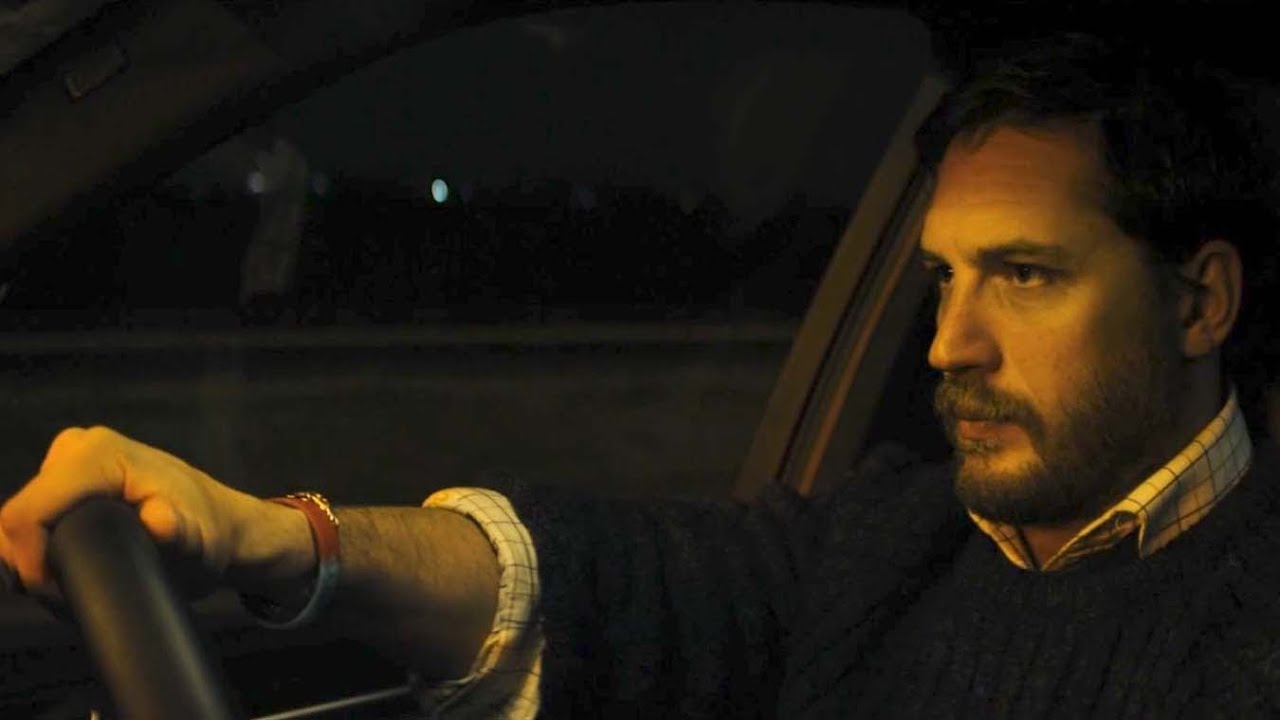
One location films have been successful through the years. From films such as Phonebooth, Red Eye and Flightplan have proven that with a tight enough script, you can create a tense and entertaining film set in a single location. It does all come down to the script, though. WIthout a good script, you could end up with Snakes on a Plane...Eek! With this, comes Steven Knight's new film, Locke. A film where the whole story takes places inside the confines of a car, and with Tom Hardy as the only actor on screen. But just how well does it work?
Firstly, the script it utterly fantastic. It wastes very little of its short running time and overall is a captivating and rewarding film with a terrific central performance. Steven Knight has crafted such great characters. They're real characters and each of them have their own personalities and yet we don't even see them on screen. Knight is quoted in saying: "'I wanted to do something quite different, in a confined space, about a guy whose life changes during the course of one car journey. And we never leave the car." And that is literally what happens.

As he takes to the road he is seemingly a man in control of his destiny, determined to do the right thing only for everything to slowly unravel. Through conversations on the phone he tries to negotiate an emerging crisis at work with his boss and an evolving domestic situation with a concerned wife and sons desperate to have their dad home to watch the football.
It's relentless - call after call we see Locke drift into despair. It's heavy and emotionally exhausting. Relentless is an apt adjective. The films roller coaster script was completely reverting as the juxtaposed character interactions went from making you laugh out loud to bringing a tear of compassion to your eye.
Clocking in at just under 90 minutes, Locke is refreshingly short and never over stays its welcome. The narrative is so constant that even when Hardy is not in hands- free phone switchboard mode, we capture another underlying story. Locke provides just as much a character journey as it does a car journey.
It is testament to Hardy's acting nous that he can pull off such a taught, powerful performance solely based on reactions to the increasingly dramatic phone calls. Locke is unrelenting in his belief of doing the right thing and we see why when he has imagined conversations with his father, an apparently neglectful and emotionally absent figure in his life. These scenes in particular are beautifully shot with the use of Locke looking into the car mirrors for the man who isn't there.

However, his Welsh accent is squiffy to say the least. It's not that it's bad, it's just really forced and unnatural. It's clear that Hardy isn't Welsh and it takes away from his performance. Also, there was no real need for him to be Welsh. The film wasn't set in Wales and the other characters had a mixture of accents. It was an odd decision to say the least.
Apart from that, though, it's a wonderful film that deserves a lot of credit. Hopefully this will shortly be recognised as a seminal British feature film. A remarkable achievement, story telling and performance at the very highest level and hugely entertaining. Collaboratively it's nothing less than a cinematic tour de force. Filmed in just eight nights and with very low budget, the film is literally a lesson of how unique and quite fantastic minimalist cinema can be.
The début feature film from acclaimed documentary filmmaker Kim Mordaunt, The Rocket is a disarmingly charming coming-of-age film set in war ravaged Laos. Mordaunt previously made the documentary Bomb Harvest, which followed a bomb disposal expert training a new team to deal with the unexploded bombs from the US's secret war against Cambodia from the 70's still littering the landscape. Obviously Mordaunt has drawn elements of this fictitious story from that film.
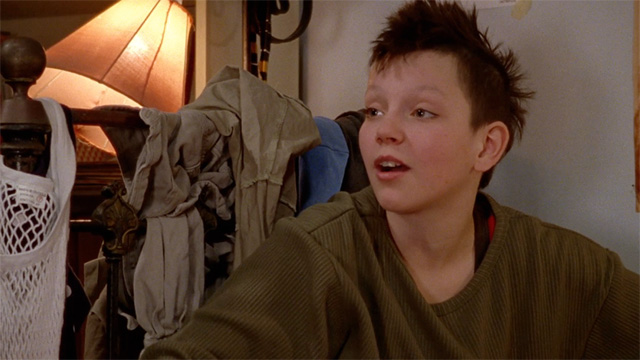
According to local lore, when twins are born, one is blessed and one is cursed. Ahlo (played by 10-year old newcomer Sitthiphon Disamoe) is the survivor of twins born to Mali (Alice Keohavong) but his grandmother believes that he is cursed. A number of incidents seem to bear this out - his village is due to be flooded to make way for a new dam; his mother is killed in a freak accident while relocating; he causes his house to be burnt down by angry neighbours. The only people who believe in Ahlo are the young girl Kia (Loungnam Kaosainam) and her uncle (Thep Phogam), who styles himself after the great blues singer James Brown. A bond develops between these outcasts. Ahlo competes in an annual rocket building competition, the winner of which receives money and great respect, hoping to change his family's fortunes.

The film is beautifully filmed on location in Laos by cinematographer Andrew Commis, The Rocket looks superb and provides an engaging insight into this exotic land and its rich culture. A moving well written tale, well told, with moving performances by all of the mainly amateur cast. An excellent insight to a wonderful country still suffering from the devastation brought about by its proximity to Vietnam. The movies does not descend into sentimentality or the tired over used clichés found in so many of the main stream releases. The child protagonists carry the film along at a pleasing pace and highlight the problems experienced in a battle scared country.
Thankfully he layers the unavoidable political notes with real warmth, humour and character, a quality that clearly benefited from using a mix of professional and non-professional actors. Mordaunt also knows how to use irony without pushing it; as Ahlo aims to prove his worth at a big rocket festival, we're reminded that this is not a political allegory, it's an offbeat, celebratory coming-of-age story about an innocent child set in a politically ravaged country. The Rocket encompasses beautiful, honourable and unique sets of attributes that have touched me and I expect will touch audiences around the world. What is remarkable, is that the heart of this story is actually transferable to any community in our world.
 It shows its stunning landscape with excellent cinematography and also touches tastefully on some controversial issues, which have been shaping the country in the past and the present. The sensitive storyline includes many layers that give it texture, which makes it such a rich movie and exiting journey for the audience. Mordaunt does not hesitate to remind of us of the legacy of American bombs dropped during the Vietnam War and still visible in the vegetation, nor does he flinch from depicting the reality of poverty and exploitation.
The acting, especially by the main cast, is very convincing and touching. The two child protagonists are extraordinary. The casual acting styles of the children were captivating & led to credence all the way through the film. Confronting issues & imagery were simply presented without sentimental or 'fluffy' enhancement. The stories of each character were presented so realistically by apparently unsophisticated actors, with the cinematography displaying facial & scenic imagery so beautifully & again simply, so as to encourage the feel of realism & the documentary style.
 I think Kim Mordaunt's inexperience in feature films is shown, however. The script, although carrying a good story, is definitely rough around the edges. The tale takes its time in forming an ideal structure and there's an awful lot of superflous exposition, which clearly comes from his documentary roots. It feels like it's a couple of rewrites away from meeting its potential.
Despite this, The Rocket is a heart-warming story carried by wonderful performances and excellent cinematography. It's an edgy film which carries some quite dark undertones, yet it is accessible for a family audience - and that has to be rewarded.
Music creates this nostalgia that holds so strong that no matter what you will always love it. Much like Inside Llewyn Davis heralded folk music, Lukas Moodysson's We Are the Best! heralds punk music more than any film around. It's punk. Even more punk than Julien Temple's The Filth and The Fury, the great documentary about the Sex Pistols and England in the late 1970s. Presented are a few young individuals who think alike and don't waver for a second to present their own opinions. They're unique - just like the rest of us - and just so you know, just because disco came around, doesn't mean punk's dead.
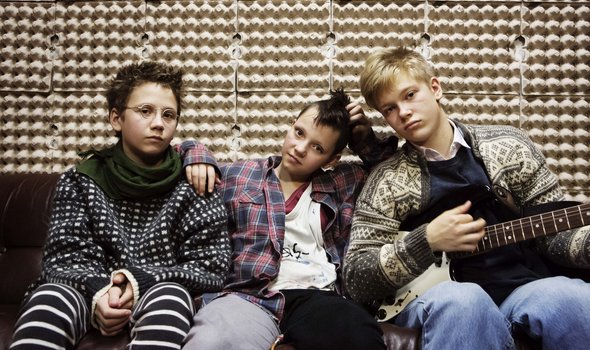
We Are the Best! is focused on three 13 year old girls as they form a punk band. The film has all the highs and lows of adolescence intertwined into the quest of being the best punk band ever; teenage angst, first love, friendship, crushes, family, identity and the disastrous consequences of drinking too much too young!

Klara (Mira Grosin) and Bobo (Mira Barkhammer) are two androgynous looking girls who don't fit in with others at their school, and are bullied for looking different. They love punk and live by the values of anti-establishment mentality and reject mainstream society and commercial disco music. One day at their after school club in order to get heavy metal band Iron Fist to stop playing their offensively loud music Bobo and Klara decide to fight music with music and start a band of their own. They don't have any instruments or indeed know how to play any, but that doesn't stop them, and I'm pretty sure there are some famous bands out there that started similarly. Outspoken and mouthy Klara nominates herself as lead singer and bassist, forcing Bobo onto the drums. Their song 'Hate the Sport' is about their dislike for PE and their 'fascist' teacher. Whilst they can master the lyrics their musical ability does not improve. Bobo sees an opportunity in recruiting Hedvig (Liv LeMoyne), a classical guitar player who is also a social outcast due to being a strict Christian. In a quest to convert her from Christianity to punk they cut off her long blonde hair to fit in with Bobo's crop and Klara's Mohawk.
We Are the Best! is certainly one of the most honest, heart-warming and endearing films about female friendship I've seen. It is adapted from his wife, Coco Moodysson's graphic novel, Never Goodnight. The story is a fictionalised account of her own teenage years as a punk rocker. The acting was amazing in the film and all girls gave a great performance, from Liv LeMoyne's wonderful folk playing and singing, to the comedic timings and playful nature of Grosin and Barkhammer, also special mention to the highly amusing, clarinet playing father of Klara played by David Dencik.
 Moodysson concentrates on the exuberance of youth, celebrating the highs of friendships and the chaotic lows of arguments, boyfriends, parents, jealousies, growing up and everything else! Everything is treated with a lack of cynicism, everyone is treated with a sense of perspective and affection. Of course, it helps that you've got three genuine and utterly infectious teenage girls to make you laugh constantly. Hedvig, Klara and Bobo display in their own individual way their sensitivities and uncertainties with life. It's not just heart-warming though, it's also terrifically funny. The children are innocent, yet also know more about the world than most adults. They're funnily written characters, with a great outlook on life. There's something lovely about seeing these children loving the punk life. A life that has a bad reputation. They bring something beautiful and intelligent about it.
It's a harcore film that's cute, sad, very funny, very Swedish and human from the core on out. The script is great, the dialogue should be a blueprint on how Swedish realism should be, Moodysson still claims the throne as the best living Swedish director, and this film will live on forever. I really hope this gets syndicated throughout the world, because that's what it deserves. Punk is back, baby! "Brezhnev, Reagan. F*** off!"
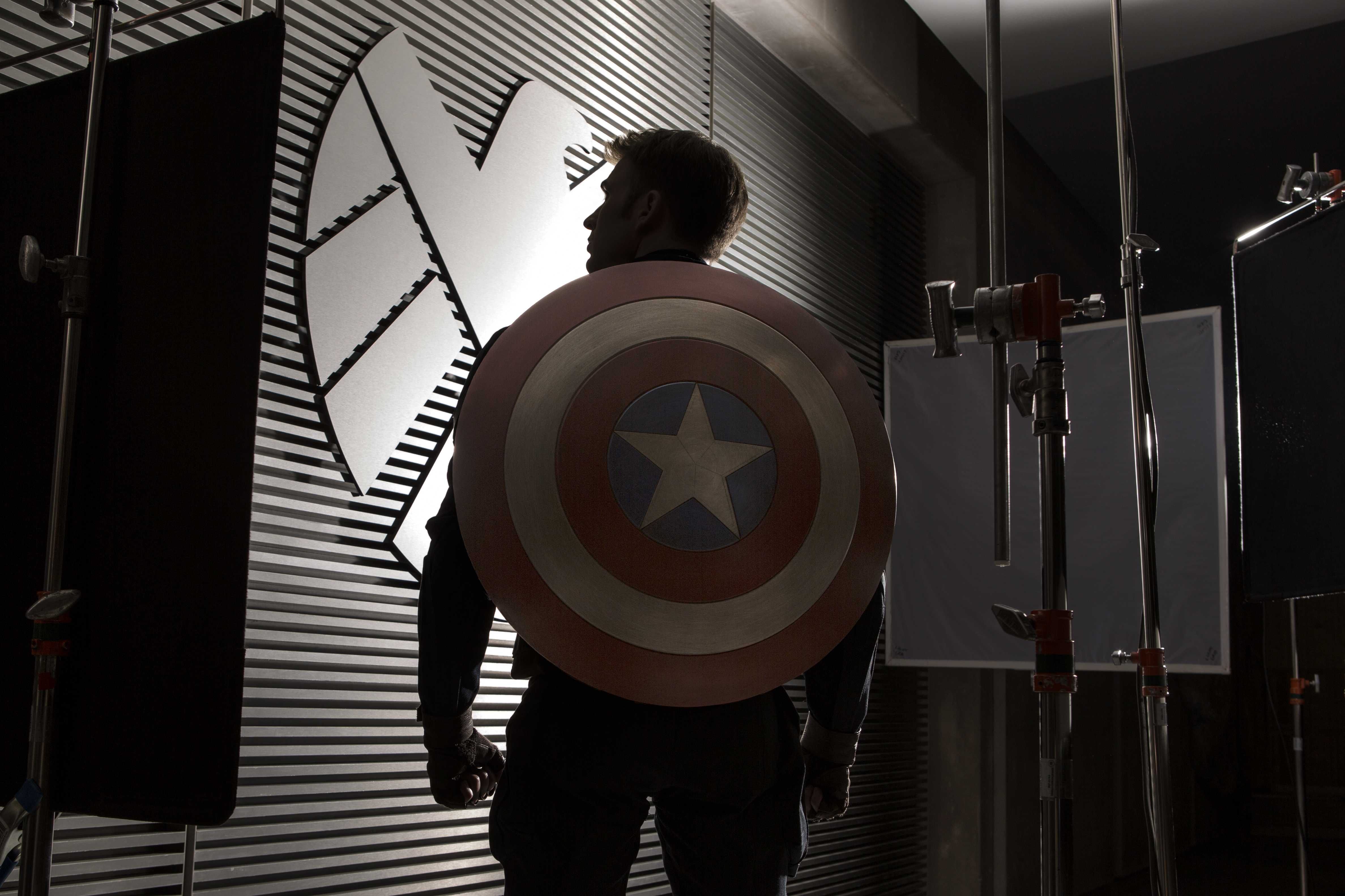
Marvel Studio's 'Phase One' was hugely successful leading all the way up to the phenomenally successful Avengers Assemble, but who was the weak link in that film? Captain America by far. Sure, he had one of the best Phase One films, but compared to Iron Man, Thor and even The Hulk he was a tad overshadowed. Who cares about a man with a shield, when you've got a man in a flying tin-can and a God?
Regarding this, Captain America: The Winter Soldier had a lot to do to make up. Especially due to the lacklustre Phase Two films thus far. So the question is, does it do it?
I would say yes. Captain America: The Winter Soldier is a competent film and easily the best Phase Two film. It's billed as a political thriller and, in part, it is exactly that. It's tense, it's fun and it has undertones of free will, corruption and how technology plays a part in all of this. It's interesting and clever, which is refreshing from all of the dumb blockbusters we've received as of late.
 However, it doesn't keep this up. I'm getting sick and tired of finales of superhero films being 30-40 minutes of set-pieces and loud noises. Especially with Cap 2 as the first two thirds were really strong in terms of the political thriller they were going for and then the finale just turned into an all out action set-piece and undermined it. It reeks of studio interference. The Russo's didn't shut up about how they were making a political thriller in promotion for the film, so why not go the whole hog? You've gone to the hassle of bringing in screen legend Robert Redford and you've built up a plot that could have had a cracking finale to just throw it out the window. It's very disappointing. It brings it right back into a standard superhero film, which is worrying because soon this superhero fad is going to burn out and audiences are going to get bored.
Also, it's called Captain America: THE WINTER SOLDIER, so why does he have little to no character or character development. I understand there's a huge ensemble and lots to get to, but he's a cool character and he should have been played on more than he was. I get that they're leading into other films, but they should have played on Bucky and Steve's past a lot more. It would have made the finale that bit more tense and exciting. It's a theme that's gone through all of the Phase Two films, which is disappointing because they've all been cast so well.
Furthermore, I didn't feel like this film needed Falcon. He was cool and Anthony Mackie plays him well, but I don't think this was his film. I feel like maybe they should have left him until the third. Especially because he's not even in Age of Ultron.
 I liked it, though, don't get me wrong. There's really strong aspects to it. Cap is a much more interesting character than the original. He has much more character and Chris Evans portrays him to brilliant effect. He plays the fish out of water character really well. I like the way they handled Black Widow's character. She is badass. I'm so glad she isn't just a bit on the side character or a love interest because The Avengers have true potential to be a bit of a sausage-fest. And it builds on the universe well. It gives Fury more character, it gives SHIELD that extra-layer and it gives the entire universe more depth. That's something that can't be said about Iron Man 3 or Thor: The Dark World.
It's another solid entry and it does its job; I'm now excited for Age of Ultron and Guardians. I have, however, been a little underwhelmed with Phase Two thus far.
Everyone has flaws and everyone has aspects about themselves that they don't like. So what if someone who looked exactly like you turned up and was everything that you weren't? He got your girls, he stole your work and he was all round more popular, confident and charismatic than you? More to the point, what if someone who looked exactly like you did all of these things and no one even noticed?
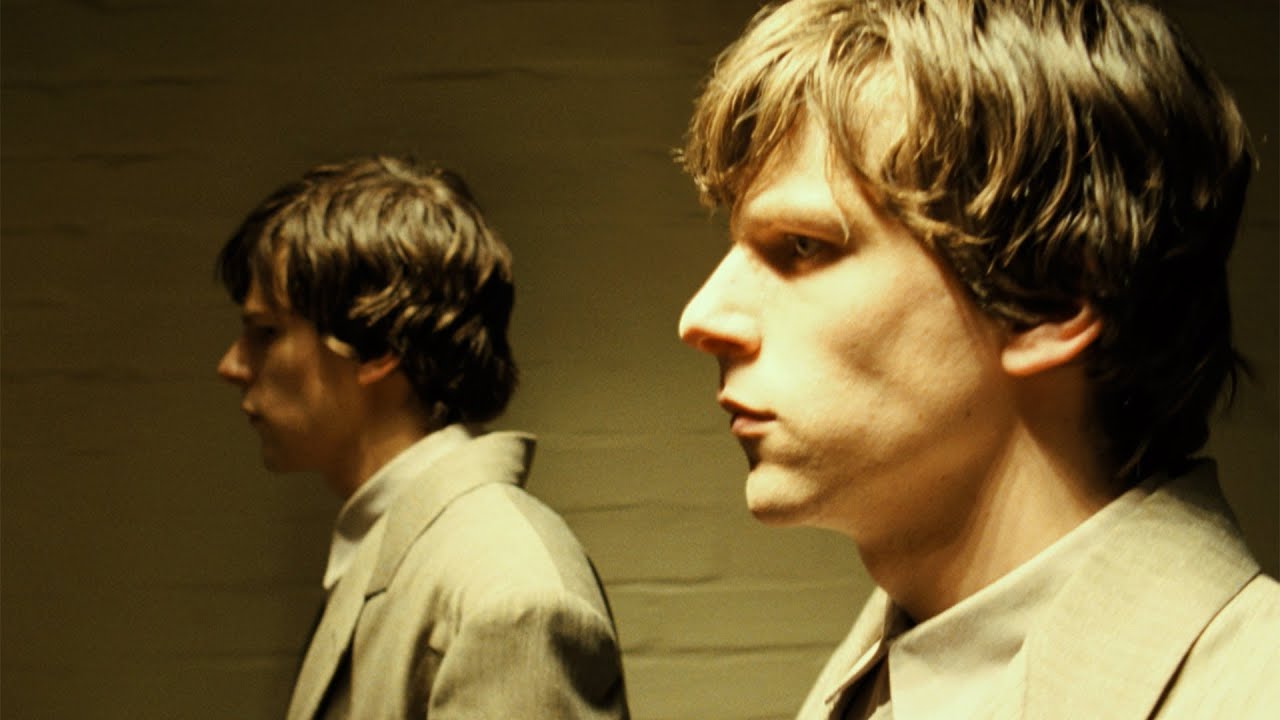
This is the second feature film from Richard Ayoade after his marvelous quirky debut Submarine. Loosely based on the Dostoevsky novel the story follows Simon James - a quiet, timid character living in a bleak, soulless world where he goes unnoticed by his boss, the cute photocopier girl and even his own mother. Then one day James Simon appears, an exact double of Simon except he's better at everything in life - he has the cocky charm, he worms his way to the top in work and even gets the girls.

Ayoade draws plenty of mannered comedy from the protagonist's embarrassment, and tremendous atmosphere from a meticulously shot and lit film. It reminded me of an early Coen Brothers film, or perhaps Jeunet & Caro. There is a dark, moody comedic tone with some hilarious dialogue and genuine pathos. The real highlight here is Ayoade's directorial style with real shades of Terry Gilliam in its surrealist approach to the world he has created. He cranks up the volume of everyday things like taps running or footsteps to build tension up in scenes and Jesse Eisenberg is perfect casting for both roles.
Although it could be said that the themes explored here are borrowed liberally from other pictures, the true originality stems from Ayoade's distinctive style; with an interesting story line, cracking script and masterful sound editing, it becomes difficult to recount even a moment of the movie which could be described as 'dull' (and certainly not 'mundane').
I felt like I was watching a film made by a group of people passionate about what they were making. Everything came together to create an excellent piece of art. The music was terrific, the style and tone were spot on and I absolutely loved the dark, nonsensical world. It harked me back to watching old Tim Burton films where everything came together to make a film with such a distinct style that you can't help describe it without using the word 'auteur'.

The icing on the cake is most certainly the performance of our lead protagonist(s), both played by Jesse Eisenberg who has surely never been (or never had) so much fun on screen. Strong performances from his acting colleagues (which includes almost the entire cast of Submarine) compliment Jesse's fine work, and is one of the many aspects helping to pave the golden path of Ayoade's walk to stardom. Playing two characters in one film can't be easy, but Eisenberg comes into his own and gives both a distinct character even down to a different walk for both characters.
The Double really was fantastic. Everything comes together to make a fantastic piece of art: lighting, music, performances are incredible. Zany, hilarious and inventive, Ayaode is as confident as any auteur behind the camera. Certainly one to watch after two marvelous, yet different films.
On the surface, Blue Ruin is a down-the-line, ticks all the boxes revenge thriller. What it actually is, is something much different. The film comes from Jeremy Saulnier, who could be introducing a new genre to cinema: the multiple-twist movie.
The plot seems pretty straight forward at first. Dwight (Macon Blair) is a homeless man living on the outskirts of an amusement park. One day he finds that the man who killed his parents is about to be released from prison. Clearly, Dwight has no intention to turn the other cheek in this case and he sets out to a successful assassination. It's a stripped down tale, but it's far from a straight forward one. Whenever you get comfortable, Blue Ruin changes into something else. Blue Ruin is a consistently unpredictable, twisty, and excellent thriller. At no point will you be quite sure where the film will take you, or what direction it will go next, up until the final scene. Saulnier's vision of crime drama with moral issues is in fact a breath of fresh air in a stagnant genre.
Dwight is a real character and this is a real film. This is not big explosions and diving out of the way in style, this is Dwight bumbling his way through assassinations and flailing away from genuine threats. Despite what cinema may have taught you, violence is a bad thing. Violence has a memory. It's that realism that makes Blue Ruin such a nervy ride. Everything Dwight does has a consequence. He never gets away scott-free, he's constantly on the run from someone - and you never know where that someone is going to come from.
 There are no moments of safety once Dwight has committed his first sin, and as such there are no moments of safety in Blue Ruin. It's a horribly tense film. At times it's an uncomfortable watch, but it's always a rewarding watch. It’s a thriller that feels like lightning; sudden, terrifying, and excitingly driven.
Blue Ruin never leaves Dwight’s perspective, everything goes through him and Macon Blair portrays him sublimely. Despite being in every scene, I still feel like I haven't even scratched the surface of the character. He gives nothing away, but he's still very easy to follow and great to watch. There's this subtlety that Blair brings to the character that makes him almost mesmerising. He's a gripping character, which makes the film gripping. This is Macon Blair's film, more so than Jeremy Saulnier's film, and he completely owns it.
Saulnier has given us so distinctively cliché in the revenge thriller and turned it on his head. He's made it real, violent and brash. And with Blair's performance on top of that, it's not to be missed.
There's a mainstream middle-brow type of film which was what the Nouvelle Vague in the 50's called the 'Cinema de Papa', that is to say, it is thoroughly conventional. It tends to platitudes, to echo the views and moral perspectives of the very average. Tradition is not a bad thing, not on its own, yet with a film like The Book Thief, it goes over much repeated material in a form which is so well known as to induce narcolepsy.
The Book Thief is thoroughly conventional. At times it is cliché and cringey, but other times it's a wonderful and emotional journey through the eyes of a little girl during the worst period of humanity. It's conventional, but it's also worth your time.

The Book Thief is about a young girl whose brother dies and her mother abandons her - all at the age of 11. She's adopted by an older couple in Nazi Germany. Her foster father teaches her how to read which lights a fire inside of her to read and read and read. Since this is Nazi Germany, books are very hard to find. The only way she can get more books is to "borrow" them. All the while, her family agrees to hide a young Jewish man in their basement which puts the young girl's family at great risk. But, the young girl and the young man become very good friends, helping each other through hard times.
WW2 films viewed from a young perspective are always interesting because of the innocence and humanity shown by the infants. Much like The Boy in the Striped Pyjamas, Liesel and her friend, Rudy, just can't fathom why all of this pain and suffering is going on in the world. Rudy dresses up like Jesse Owens and pretends to be him and ultimately, is punished for it. Of course, he can't see what he's doing wrong. I think this aspect of the film was handled really well.
To be honest, the entirety was handled well, which is a problem for me. World War 2 was the worst period of time throughout all of humanity and this film doesn't give that impression. I never felt like the children were in that much trouble or that there was much threat. It's understandble why they have gone down this route. After all, this film is aimed at a younger audience. I do accept that it's a good way for children to engage with World War 2, I just wish it was grittier and darker because that's what the subject matter deserves. It's just a bit too glossy for my liking.

An aspect that is it very strong in though is it's performances. Geoffrey Rush in particular is fantastic. He is so loveable. Every little nuance is done to perfection and his chemistry with Sophie Nélisse's Liesel, who also puts in a great performance, is wonderful. It gives the film heart. Everything goes through Liesel and she keeps up her performance throughout the entire film. Something has to be said of Emily Watson's role too. Every time I see Watson on screen she continues to amaze me. She brings so much to the screen and it's a joy to watch.

Also, it wouldn't be a war film without a John Williams score. I don't know how he continues to do it. He is into his eighties now and he provides the brightest spark to the film. Orchestrations are once again superb, the music finely crafted with that Williams-esque brand of class we have come to expect from his work. For the most part this score is quite small in scope and the chamber sized orchestra consists mainly of the strings, woodwinds and a small brass section. His score pulls at the heartstrings and it certainly packs a punch.
This is an odd film. I thoroughly enjoyed it, but I came out a tad unsatisfied - yet I cried and I laughed in all of the right places. It's a good story heightened by its excellent performances and score. For what it was going for, I think it was good. It was child friendly and a good way of introducing children into a horrific period of time. I was just left thinking, what if Spielberg directed it? What if Polanski directed it? And what if del Toro directed it rather than a guy who has made his name on Downton Abbey? It could have been regarded a lot higher.
A conventional film, but it's heart is in the right place.