Sunday, 6 April 2014

We Are the Best! Review

Music creates this nostalgia that holds so strong that no matter what you will always love it. Much like Inside Llewyn Davis heralded folk music, Lukas Moodysson's We Are the Best! heralds punk music more than any film around. It's punk. Even more punk than Julien Temple's The Filth and The Fury, the great documentary about the Sex Pistols and England in the late 1970s. Presented are a few young individuals who think alike and don't waver for a second to present their own opinions. They're unique - just like the rest of us - and just so you know, just because disco came around, doesn't mean punk's dead.

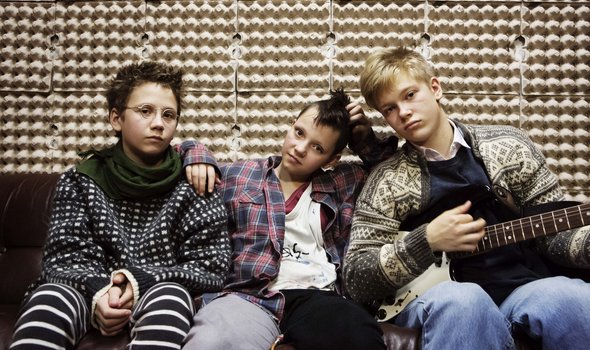
We Are the Best! is focused on three 13 year old girls as they form a punk band. The film has all the highs and lows of adolescence intertwined into the quest of being the best punk band ever; teenage angst, first love, friendship, crushes, family, identity and the disastrous consequences of drinking too much too young!

Klara (Mira Grosin) and Bobo (Mira Barkhammer) are two androgynous looking girls who don't fit in with others at their school, and are bullied for looking different. They love punk and live by the values of anti-establishment mentality and reject mainstream society and commercial disco music. One day at their after school club in order to get heavy metal band Iron Fist to stop playing their offensively loud music Bobo and Klara decide to fight music with music and start a band of their own. They don't have any instruments or indeed know how to play any, but that doesn't stop them, and I'm pretty sure there are some famous bands out there that started similarly. Outspoken and mouthy Klara nominates herself as lead singer and bassist, forcing Bobo onto the drums. Their song 'Hate the Sport' is about their dislike for PE and their 'fascist' teacher. Whilst they can master the lyrics their musical ability does not improve. Bobo sees an opportunity in recruiting Hedvig (Liv LeMoyne), a classical guitar player who is also a social outcast due to being a strict Christian. In a quest to convert her from Christianity to punk they cut off her long blonde hair to fit in with Bobo's crop and Klara's Mohawk. 


We Are the Best! is certainly one of the most honest, heart-warming and endearing films about female friendship I've seen. It is adapted from his wife, Coco Moodysson's graphic novel, Never Goodnight. The story is a fictionalised account of her own teenage years as a punk rocker. The acting was amazing in the film and all girls gave a great performance, from Liv LeMoyne's wonderful folk playing and singing, to the comedic timings and playful nature of Grosin and Barkhammer, also special mention to the highly amusing, clarinet playing father of Klara played by David Dencik. 
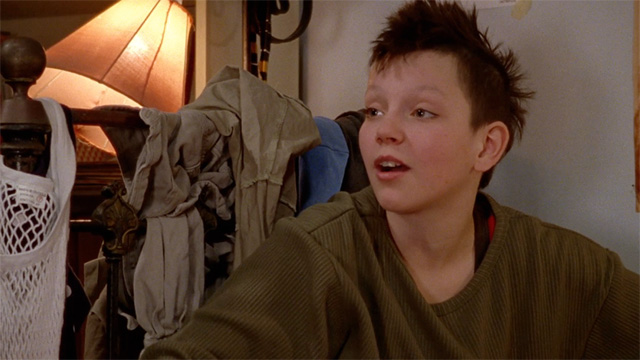
Moodysson concentrates on the exuberance of youth, celebrating the highs of friendships and the chaotic lows of arguments, boyfriends, parents, jealousies, growing up and everything else! Everything is treated with a lack of cynicism, everyone is treated with a sense of perspective and affection. Of course, it helps that you've got three genuine and utterly infectious teenage girls to make you laugh constantly. Hedvig, Klara and Bobo display in their own individual way their sensitivities and uncertainties with life. It's not just heart-warming though, it's also terrifically funny. The children are innocent, yet also know more about the world than most adults. They're funnily written characters, with a great outlook on life. There's something lovely about seeing these children loving the punk life. A life that has a bad reputation. They bring something beautiful and intelligent about it. 

It's a harcore film that's cute, sad, very funny, very Swedish and human from the core on out. The script is great, the dialogue should be a blueprint on how Swedish realism should be, Moodysson still claims the throne as the best living Swedish director, and this film will live on forever. I really hope this gets syndicated throughout the world, because that's what it deserves. Punk is back, baby! "Brezhnev, Reagan. F*** off!"

Saturday, 5 April 2014

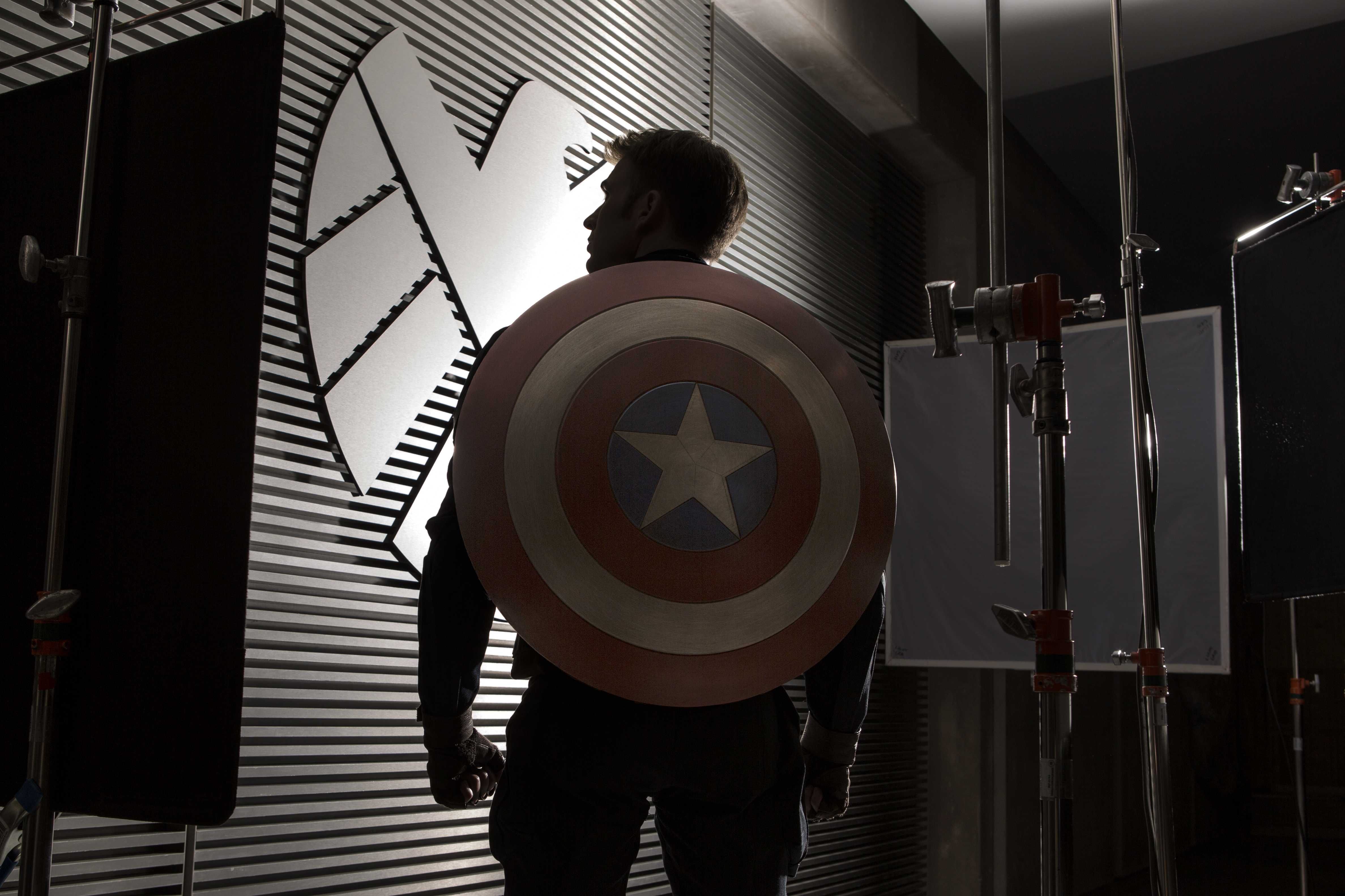
Captain America: The Winter Soldier Review

Marvel Studio's 'Phase One' was hugely successful leading all the way up to the phenomenally successful Avengers Assemble, but who was the weak link in that film? Captain America by far. Sure, he had one of the best Phase One films, but compared to Iron Man, Thor and even The Hulk he was a tad overshadowed. Who cares about a man with a shield, when you've got a man in a flying tin-can and a God? 

Regarding this, Captain America: The Winter Soldier had a lot to do to make up. Especially due to the lacklustre Phase Two films thus far. So the question is, does it do it?

I would say yes. Captain America: The Winter Soldier is a competent film and easily the best Phase Two film. It's billed as a political thriller and, in part, it is exactly that. It's tense, it's fun and it has undertones of free will, corruption and how technology plays a part in all of this. It's interesting and clever, which is refreshing from all of the dumb blockbusters we've received as of late.

However, it doesn't keep this up.  I'm getting sick and tired of finales of superhero films being 30-40 minutes of set-pieces and loud noises. Especially with Cap 2 as the first two thirds were really strong in terms of the political thriller they were going for and then the finale just turned into an all out action set-piece and undermined it. It reeks of studio interference. The Russo's didn't shut up about how they were making a political thriller in promotion for the film, so why not go the whole hog? You've gone to the hassle of bringing in screen legend Robert Redford and you've built up a plot that could have had a cracking finale to just throw it out the window. It's very disappointing. It brings it right back into a standard superhero film, which is worrying because soon this superhero fad is going to burn out and audiences are going to get bored. 

Also, it's called Captain America: THE WINTER SOLDIER, so why does he have little to no character or character development. I understand there's a huge ensemble and lots to get to, but he's a cool character and he should have been played on more than he was. I get that they're leading into other films, but they should have played on Bucky and Steve's past a lot more. It would have made the finale that bit more tense and exciting. It's a theme that's gone through all of the Phase Two films, which is disappointing because they've all been cast so well. 

Furthermore, I didn't feel like this film needed Falcon. He was cool and Anthony Mackie plays him well, but I don't think this was his film. I feel like maybe they should have left him until the third. Especially because he's not even in Age of Ultron

I liked it, though, don't get me wrong. There's really strong aspects to it. Cap is a much more interesting character than the original. He has much more character and Chris Evans portrays him to brilliant effect. He plays the fish out of water character really well. I like the way they handled Black Widow's character. She is badass. I'm so glad she isn't just a bit on the side character or a love interest because The Avengers have true potential to be a bit of a sausage-fest. And it builds on the universe well. It gives Fury more character, it gives SHIELD that extra-layer and it gives the entire universe more depth. That's something that can't be said about Iron Man 3 or Thor: The Dark World

It's another solid entry and it does its job; I'm now excited for Age of Ultron and Guardians. I have, however, been a little underwhelmed with Phase Two thus far. 

Tuesday, 1 April 2014

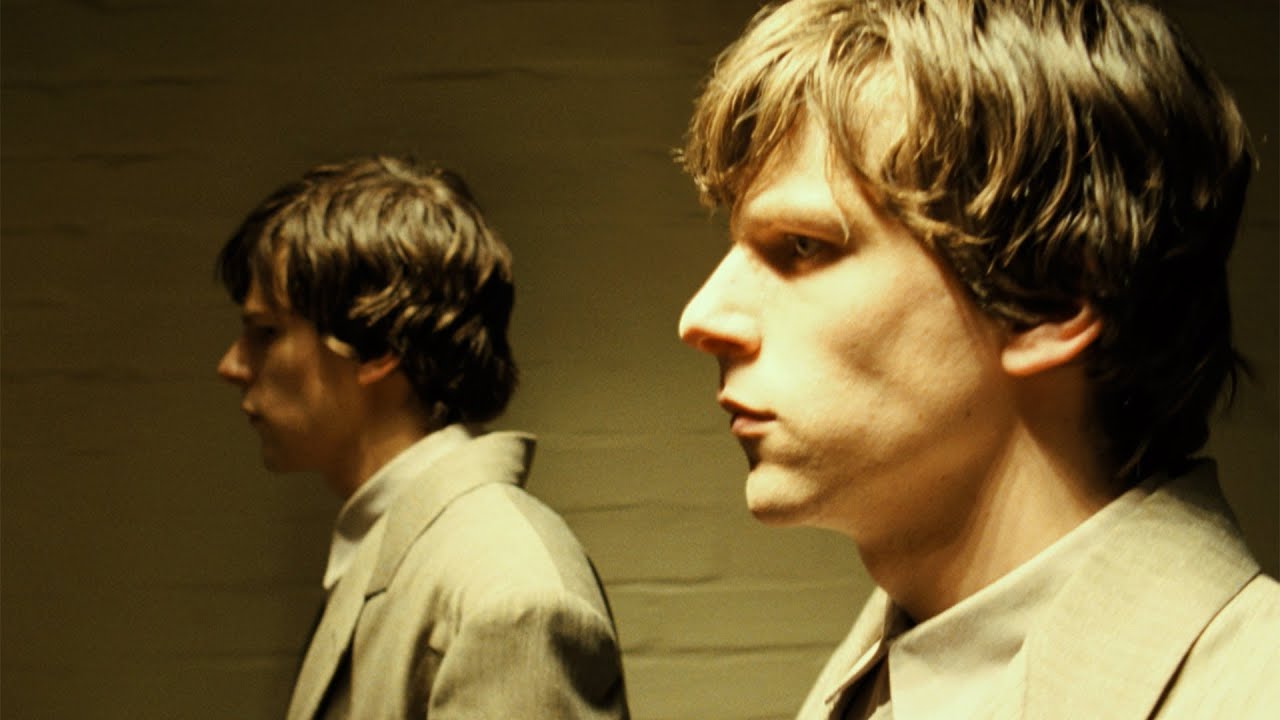
The Double Review

Everyone has flaws and everyone has aspects about themselves that they don't like. So what if someone who looked exactly like you turned up and was everything that you weren't? He got your girls, he stole your work and he was all round more popular, confident and charismatic than you? More to the point, what if someone who looked exactly like you did all of these things and no one even noticed? 

This is the second feature film from Richard Ayoade after his marvelous quirky debut Submarine. Loosely based on the Dostoevsky novel the story follows Simon James - a quiet, timid character living in a bleak, soulless world where he goes unnoticed by his boss, the cute photocopier girl and even his own mother. Then one day James Simon appears, an exact double of Simon except he's better at everything in life - he has the cocky charm, he worms his way to the top in work and even gets the girls.


Ayoade draws plenty of mannered comedy from the protagonist's embarrassment, and tremendous atmosphere from a meticulously shot and lit film. It reminded me of an early Coen Brothers film, or perhaps Jeunet & CaroThere is a dark, moody comedic tone with some hilarious dialogue and genuine pathos. The real highlight here is Ayoade's directorial style with real shades of Terry Gilliam in its surrealist approach to the world he has created. He cranks up the volume of everyday things like taps running or footsteps to build tension up in scenes and Jesse Eisenberg is perfect casting for both roles.


Although it could be said that the themes explored here are borrowed liberally from other pictures, the true originality stems from Ayoade's distinctive style; with an interesting story line, cracking script and masterful sound editing, it becomes difficult to recount even a moment of the movie which could be described as 'dull' (and certainly not 'mundane').


I felt like I was watching a film made by a group of people passionate about what they were making. Everything came together to create an excellent piece of art. The music was terrific, the style and tone were spot on and I absolutely loved the dark, nonsensical world. It harked me back to watching old Tim Burton films where everything came together to make a film with such a distinct style that you can't help describe it without using the word 'auteur'. 

The icing on the cake is most certainly the performance of our lead protagonist(s), both played by Jesse Eisenberg who has surely never been (or never had) so much fun on screen. Strong performances from his acting colleagues (which includes almost the entire cast of Submarine) compliment Jesse's fine work, and is one of the many aspects helping to pave the golden path of Ayoade's walk to stardom. Playing two characters in one film can't be easy, but Eisenberg comes into his own and gives both a distinct character even down to a different walk for both characters. 


The Double really was fantastic. Everything comes together to make a fantastic piece of art: lighting, music, performances are incredible. Zany, hilarious and inventive, Ayaode is as confident as any auteur behind the camera. Certainly one to watch after two marvelous, yet different films.

Thursday, 27 March 2014

Blue Ruin Review


On the surface, Blue Ruin is a down-the-line, ticks all the boxes revenge thriller. What it actually is, is something much different. The film comes from Jeremy Saulnier, who could be introducing a new genre to cinema: the multiple-twist movie. 

The plot seems pretty straight forward at first. Dwight (Macon Blair) is a homeless man living on the outskirts of an amusement park. One day he finds that the man who killed his parents is about to be released from prison. Clearly, Dwight has no intention to turn the other cheek in this case and he sets out to a successful assassination. It's a stripped down tale, but it's far from a straight forward one. Whenever you get comfortable, Blue Ruin changes into something else. Blue Ruin is a consistently unpredictable, twisty, and excellent thriller. At no point will you be quite sure where the film will take you, or what direction it will go next, up until the final scene. Saulnier's vision of crime drama with moral issues is in fact a breath of fresh air in a stagnant genre.


Dwight is a real character and this is a real film. This is not big explosions and diving out of the way in style, this is Dwight bumbling his way through assassinations and flailing away from genuine threats. Despite what cinema may have taught you, violence is a bad thing. Violence has a memory. It's that realism that makes Blue Ruin such a nervy ride. Everything Dwight does has a consequence. He never gets away scott-free, he's constantly on the run from someone - and you never know where that someone is going to come from. 

 There are no moments of safety once Dwight has committed his first sin, and as such there are no moments of safety in Blue Ruin. It's a horribly tense film. At times it's an uncomfortable watch, but it's always a rewarding watch. It’s a thriller that feels like lightning; sudden, terrifying, and excitingly driven.

Blue Ruin never leaves Dwight’s perspective, everything goes through him and Macon Blair portrays him sublimely. Despite being in every scene, I still feel like I haven't even scratched the surface of the character. He gives nothing away, but he's still very easy to follow and great to watch. There's this subtlety that Blair brings to the character that makes him almost mesmerising. He's a gripping character, which makes the film gripping. This is Macon Blair's film, more so than Jeremy Saulnier's film, and he completely owns it.

Saulnier has given us so distinctively cliché in the revenge thriller and turned it on his head. He's made it real, violent and brash. And with Blair's performance on top of that, it's not to be missed. 

Thursday, 27 February 2014

The Book Thief Review

There's a mainstream middle-brow type of film which was what the Nouvelle Vague in the 50's called the 'Cinema de Papa', that is to say, it is thoroughly conventional. It tends to platitudes, to echo the views and moral perspectives of the very average. Tradition is not a bad thing, not on its own, yet with a film like The Book Thief, it goes over much repeated material in a form which is so well known as to induce narcolepsy.

The Book Thief is thoroughly conventional. At times it is cliché and cringey, but other times it's a wonderful and emotional journey through the eyes of a little girl during the worst period of humanity. It's conventional, but it's also worth your time. 


The Book Thief is about a young girl whose brother dies and her mother abandons her - all at the age of 11. She's adopted by an older couple in Nazi Germany. Her foster father teaches her how to read which lights a fire inside of her to read and read and read. Since this is Nazi Germany, books are very hard to find. The only way she can get more books is to "borrow" them. All the while, her family agrees to hide a young Jewish man in their basement which puts the young girl's family at great risk. But, the young girl and the young man become very good friends, helping each other through hard times.


WW2 films viewed from a young perspective are always interesting because of the innocence and humanity shown by the infants. Much like The Boy in the Striped Pyjamas, Liesel and her friend, Rudy, just can't fathom why all of this pain and suffering is going on in the world. Rudy dresses up like Jesse Owens and pretends to be him and ultimately, is punished for it. Of course, he can't see what he's doing wrong. I think this aspect of the film was handled really well.


To be honest, the entirety was handled well, which is a problem for me. World War 2 was the worst period of time throughout all of humanity and this film doesn't give that impression. I never felt like the children were in that much trouble or that there was much threat. It's understandble why they have gone down this route. After all, this film is aimed at a younger audience. I do accept that it's a good way for children to engage with World War 2, I just wish it was grittier and darker because that's what the subject matter deserves. It's just a bit too glossy for my liking.

An aspect that is it very strong in though is it's performances. Geoffrey Rush in particular is fantastic. He is so loveable. Every little nuance is done to perfection and his chemistry with Sophie Nélisse's Liesel, who also puts in a great performance, is wonderful. It gives the film heart. Everything goes through Liesel and she keeps up her performance throughout the entire film. Something has to be said of Emily Watson's role too. Every time I see Watson on screen she continues to amaze me. She brings so much to the screen and it's a joy to watch. 

Also, it wouldn't be a war film without a John Williams score. I don't know how he continues to do it. He is into his eighties now and he provides the brightest spark to the film. Orchestrations are once again superb, the music finely crafted with that Williams-esque brand of class we have come to expect from his work. For the most part this score is quite small in scope and the chamber sized orchestra consists mainly of the strings, woodwinds and a small brass section. His score pulls at the heartstrings and it certainly packs a punch.

This is an odd film. I thoroughly enjoyed it, but I came out a tad unsatisfied - yet I cried and I laughed in all of the right places. It's a good story heightened by its excellent performances and score. For what it was going for, I think it was good. It was child friendly and a good way of introducing children into a horrific period of time. I was just left thinking, what if Spielberg directed it? What if Polanski directed it? And what if del Toro directed it rather than a guy who has made his name on Downton Abbey? It could have been regarded a lot higher.  

A conventional film, but it's heart is in the right place. 

Saturday, 22 February 2014

Nymphomaniac Volumes 1&2 Review

To be honest, I had my doubts when I went to see this film. After all the buzz, I more or less expected a provocative, pretentious, incomprehensible porno film. I thought Nymphomaniac would be a shallow artistic excuse to show lots of explicit sex in an attempt to shock the audience and create controversy.


Well, I was wrong.


Is it provocative? In some ways, yes. I think choosing nymphomania as a subject for a film is already some sort of provocation. And there are some scenes that might be considered tasteless or mildly shocking. But if I would have to describe the film in one word, I wouldn't use 'provocative'. Instead, I would use 'imaginative'.


Because that is what this film is: imaginative. It's so full of ideas, full of creativity and full of cinematographic exuberance that it's hard not be impressed. The nice thing is that Lars Von Trier never takes himself too seriously. In a way, it's a pity that the film is about sex. So much attention is being given to the number of penises shown and the number of vagina close-ups that it overshadows everything else, including the creative way the film is made.

Lars Von Trier has crafted an absolutely epic story filled with beauty, humour and heartbreak – but it's his writing that is most impressive. Von Trier's dialogue is so simple, yet so beautiful. The dialogue between Joe and Seligman is remarkable. The words are literally coming off the page. As good as the acting is, it's hard not to be impressive when you're given this material. His script is dense. He's created this world that is unlike no other. It doesn't have an actual set city – everyone speaks with a different accent (whether that is intentional or not I don't know) - but it definitely has a universe. You're immersed in this universe for four hours and you never want to leave.

The story is told very cleverly. It's told in chapters and it really has this 'epic' feel about it. Like we're being told a fairy tale, albeit an X-rated fairy tale. It's a nice juxtaposition that gives the film depth. Von Trier visualises this to aplomb. One wonderful example of this creative approach is the final chapter, where Joe sees a similarity between her complicated love life and Seligman's favourite piece of polyphonic organ music. She compares her lovers to the three different melodic tunes in the music. The way Von Triers visualizes this, with the screen split in three to show cross cuttings of the organ and the lovers, is original and funny at the same time. Throughout the film we get ugly, pointless inserts (nature shots, animals, choir boys etc.) that are derived from low-quality, low-resolution video material. This is a fantastic technique used by Von Trier because it gives us a break from the bleak drama. They're funny, refreshing and well used.

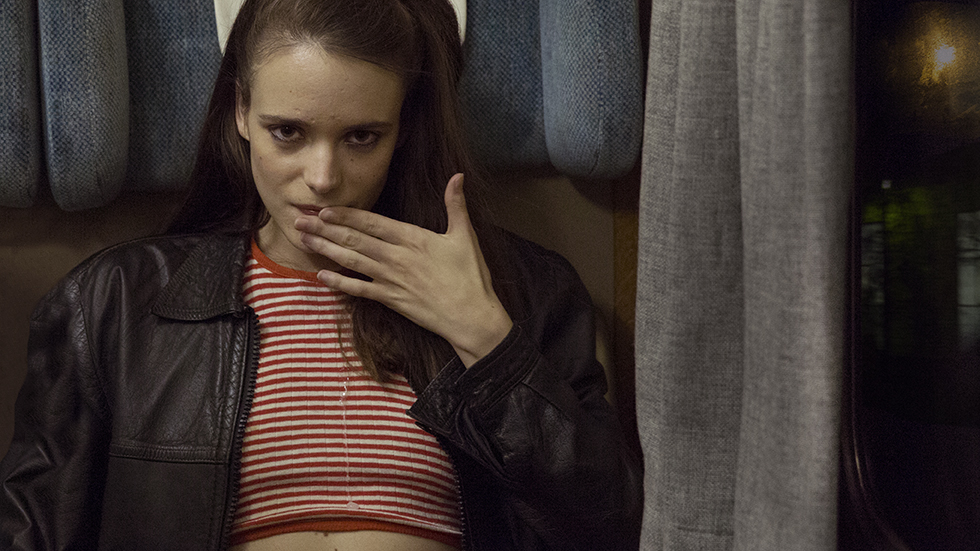
His visualisation is helped by some superb performances. Obviously, Charlotte Gainsborough, newcomer Stacy Martin and Stellan Skarsgård will receive most of the plaudits – but there are some fantastic performances hidden beneath. Uma Thurman, who is in the film for one scene, brings the film it's funniest moments. She is absolutely brilliant. I haven't seen her this good for a long, long time. Also, Jamie Bell plays a fantastic sadist. (Who would have thought?! Billy bloody Elliot!)

The film is split into two parts in Kill Bill style. Although this was not Von Trier's choice, it's handled very well. The two parts are distinct and the both carry a different style and tone. The first part has a lighter tone and plays out as a tongue-in-cheek caper while the second is darker and grittier. Both work very well and oddly, despite the change in tones, they lead into each other very well. However, the transformation from 'young Joe' to 'older Joe' feels very weird. It felt rigid and hampered the flow of the film. The same can be said of other characters that were recast, it feels very odd. It was an odd decision considering the age difference isn't particularly that big. Despite this, the film never feels too long, which, considering its length, is very impressive.

It's funny and brilliant, its dark and thrilling and its poetic at the same time. If you're a fan of Von Trier you won't be disappointed and equally, if you're not I think it's an accessible film. This film is not about sex. Its about loneliness between sensations, about being alone among people who suffer from lack of attachment. Its about life that struggles with death by facing death, to the ultimate boundary of pleasure.

It's a superb film and I would liken it more to a film of intertwining plots and characters such as Pulp Fiction and last years The Place Beyond the Pines. It's a clever that just happens to be about sex. Take a chance. Go and see it. 

Friday, 7 February 2014

Harry Potter: Alfonso Cuaron, Chris Columbus and the Change in Tone

Many regard Alfonso Cuaron as one of the brightest sparks in film making today and it's no surprise why. Cuaron is off the back of the incredible Gravity, which has done amazingly with both critics and the box-office and it's deserving of all it's praise. It's a marvel in technical achievement. I wouldn't' be surprised if he picked up the Best Director Oscar (although he has healthy competition up against Steve McQueen). Before that, he made Children of Men - arguably one of the best films ever made. He also made Harry Potter and the Prisoner of Azkaban, which is regarded as the best Potter film and is easily my favourite. I would argue that Cuaron changed the way people looked at the series AND changed the tone and direction of the series.

Cuaron took the reigns from Chris Columbus, who has a very reputable track record, I mean seriously, he pretty much made my childhood with Home Alone 1&2 and Mrs Doubtfire. But that's what he made, children's films. I don't think he was right for the chair of Harry Potter. Maybe that's a bit harsh, he did well with the opening two - but Cuaron saved the day by taking over. The previous films were cheesy and charming, but they didn't have any bite. Imagine Columbus dealing with Werewolves, Dementors and death scenes. It would have been horrible. However, he has to be credited with his incredible casting. Without him, we wouldn't have Alan Rickman, Maggie Smith, John Cleese, John Hurt, Jason Isaacs (hello by the way), Toby Jones, Kenneth Branagh and Robbie Coltrane. For an American, he certainly knew his British cinema.

On the topic of casting,  I think Cuaron's casting was ingenious. Not only did he cast the greatest living British actor in Gary Oldman as Sirius Black (who actually took the role because he needed the money, who would have thought?), but he also replaced the deceased Richard Harris with the fantastic Michael Gambon. Now, I don't want to disrespect the late Richard Harris (he truly is a remarkable actor), but I don't think he would've fit with the Dumbledore of the later books, who, lets face it, is a massive dick - but a loveable dick nonetheless. Who better to play that than the loveable dick that is Michael Gambon? It was a casting masterstroke from Cuaron. Also, Timothy Spall is outstanding as Wormtail. He is literally who I was picturing when I was reading the books. David Thewlis is incredible as my favourite character, Remus Lupin and Emma Thompson as Trelawney was fantastic. I think all the c
hildren inside us enjoyed seeing Pam Ferris aka Ms Trunchbull getting blown up as well! It was a masterstroke in casting.

It's also well known that Cuaron pushed Radcliffe, Watson and Grint to perform better as actors and it shows. If you go back and watch The Philosophers Stone and The Chamber of Secrets and then watch The Prisoner of Azkaban the acting is completely different. They're like different actors, the performances he gets out of these children is impressive, with Emma Watson as the shining star.

Azkaban's cinematography is beautiful too. You just have to watch the Buckbeak flying scene to realise the true beauty of Michael Seresin's work. It's everything you'd expect from a Cuaron film. Truly stunning film making.

It has to be said that Azkaban is easily the best book. There's a lot to get your teeth into - the time-travel, the mythical creatures, the marauders map and lots of new characters - but boy does Cuaron take a big bite. He was fully invested. He added his touch to the world of Harry Potter. He designed the tattoos on Sirius, he created the Hogwarts Bridge and he brought a brand new style and tone that just worked for Harry Potter. With that, he created one of the greatest fantasy films of all time. And without him, I don't think we'd see Voldemort looking the way he did, I don't think the final films would have been so dramatic and I don't think it would go down as one of the most consistent franchises in history.

He may have seen widespread acclaim with Children of Men and Gravity, but as a Potterhead, I thank Alfonso Cuaron for his work on The Prisoner of Azkaban.